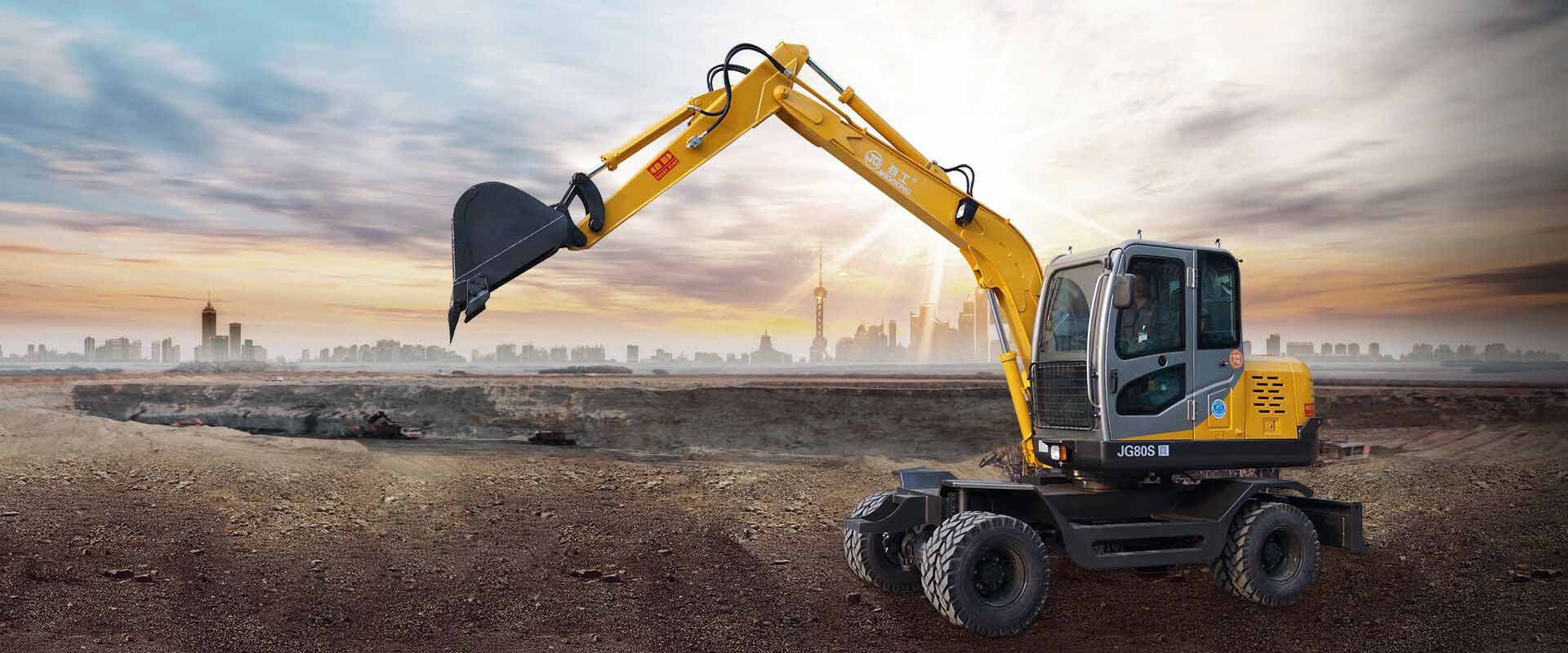
Escolher uma garra para manuseio de materiais não é simplesmente uma questão de selecionar o implemento maior ou mais forte.O material sendo manuseado deve determinar o design da garra em primeiro lugar.
Sucata metálica, toras, materiais a granel soltos, fardos de algodão e rochas têm características físicas completamente diferentes. Uma garra que funciona bem para sucata de aço pode ser ineficiente para algodão, enquanto uma caçamba tipo concha que é adequada para materiais soltos não foi projetada para peças de aço irregulares.
Para pátios de reciclagem, operações florestais, canteiros de obras e empreiteiros de manuseio de materiais, o implemento certo pode afetar diretamentea eficiência de carregamento, a perda de material, a demanda hidráulica e o custo operacional.
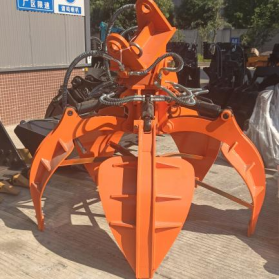
Uma garra tipo casca de laranja de quatro dentes é particularmente adequada para materiais de sucata irregulares, volumosos e mistos que são difíceis de manusear com uma caçamba convencional.
Aplicações típicas incluem:
· Sucata de aço mista
· Estruturas de sucata
· Tubos de metal
· Placas de aço
· Sucata de demolição
· Grandes peças de metal irregulares
A estrutura de múltiplos dentes permite que a garra se aproxime do material de diferentes direções e segure formas irregulares com segurança.
Para pátios de sucata, os fatores importantes não são apenas a capacidade da garra, mas também:
· Largura de abertura
· Resistência dos dentes
· Força de fechamento
· Fluxo hidráulico
· Peso do implemento
· Capacidade de elevação da escavadeira
Uma garra de quatro dentes é frequentemente uma escolha prática quando o material contém diferentes formas e tamanhos e o operador precisa repetirpegar, mover e carregar sucata.
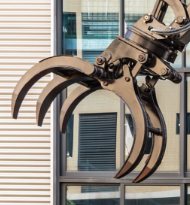
Uma garra 2+3 utiliza dois dentes de um lado e três do outro, tornando-a particularmente útil quando a aderência controlada e a separação são importantes.
Comparada com um design de múltiplos dentes mais fechado, a configuração 2+3 pode proporcionar boa visibilidade e flexibilidade ao manusear:
· Toras
· Seções longas de aço
· Tubos
· Materiais agrupados
· Peças individuais grandes
· Materiais de construção irregulares
Para o manuseio de materiais, o objetivo nem sempre é pegar a quantidade máxima.
Às vezes, o operador precisa pegar uma peça específica sem perturbar o material ao redor.
É aqui que o arranjo dos dentes se torna importante.
Por exemplo, ao manusear materiais longos, a garra precisa de abertura e estabilidade de aderência suficientes para evitar que o material deslize durante o levantamento e a rotação.
Uma caçamba tipo concha é mais adequada para materiais soltos que podem ser coletados por volume em vez de serem agarrados individualmente.
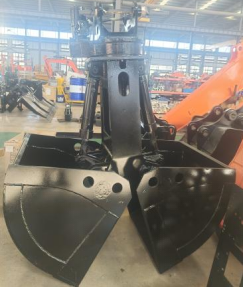
Os materiais típicos incluem:
· Areia
· Cascalho
· Carvão
· Solo
· Pequenos agregados
· Materiais industriais soltos
O princípio de funcionamento é diferente de uma garra de casca de laranja.
Uma garra agarra o material pelo lado de fora, enquanto uma caçamba tipo concha envolve e transporta o material dentro da caçamba.
Isso torna o design tipo concha mais apropriado quando a prioridade é:Volume por ciclo em vez de agarrar objetos individuais.
Ao escolher uma caçamba tipo concha, preste atenção a:
· Capacidade da caçamba
· Largura de abertura
· Densidade do material
· Capacidade de elevação da escavadeira
· Pressão e fluxo hidráulico
· Raio de trabalho
Uma caçamba que seja grande demais para uma determinada escavadeira pode reduzir a produtividade real devido ao peso excessivo do acessório e à capacidade de elevação reduzida.
O algodão requer uma estratégia de agarre completamente diferente porque é leve, volumoso e facilmente deformável.
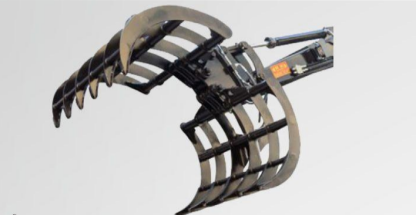
As garras para algodão são comumente usadas para:
· Fardos de algodão
· Feno
· Palha
· Materiais de fibra agrícola
· Outros materiais leves enfardados
A garra precisa segurar o material com segurança sem danificá-lo ou esmagá-lo excessivamente.
Comparado com uma garra para sucata, as principais considerações são:
Grande área de contato + força de agarre controlada + baixo peso do acessório.
Usar uma garra de aço resistente para algodão geralmente seria ineficiente. O acessório pode ser mecanicamente forte, mas sua geometria de agarre não é otimizada para materiais leves e compressíveis.
Isso ilustra um princípio importante:A garra mais forte não é necessariamente a garra mais adequada.
Uma garra para pedras foi projetada para materiais pesados, duros e irregulares, onde a alta resistência estrutural e a retenção segura são mais importantes do que um grande volume de abertura.
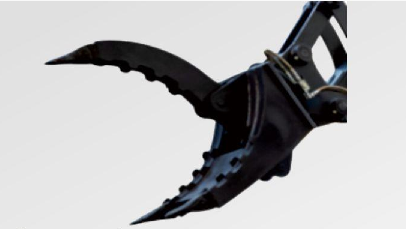
As aplicações típicas incluem:
· Grandes rochas
· Pedra natural
· Materiais de pedreira
· Pedras de construção
· Pedras para paisagismo
· Entulho de demolição
O manuseio de pedras cria cargas de alto impacto quando as rochas são levantadas, rotacionadas e posicionadas.
Portanto, a seleção do acessório deve considerar:
· Resistência estrutural
· Espessura dos dentes
· Design do pivô
· Proteção contra desgaste
· Estabilidade da escavadeira
· Capacidade do cilindro hidráulico
Para pedras grandes, a capacidade de levantamento no raio de trabalho real da escavadeira é particularmente importante. Uma máquina pode ter capacidade de levantamento nominal suficiente perto da máquina, mas tornar-se significativamente menos capaz quando a lança está totalmente estendida.
A maneira mais simples de selecionar um acessório é começar pelo material, não pela escavadeira.
|
Material |
Acessório recomendado |
Vantagem principal |
|
Sucata de aço mista |
Garra polip de quatro dentes |
Aderência forte para materiais irregulares |
|
Toras / materiais longos |
Garra 2+3 |
Aderência e separação controladas |
|
Areia / cascalho / material solto |
Caçamba bivalva |
Manuseio de alto volume |
|
Fardos de algodão / feno / fibra |
Garra para algodão |
Aderência controlada de grandes áreas |
|
Rochas / pedra natural |
Garra para pedras |
Alta resistência estrutural |
Não existe uma "melhor garra" universal.
Um pátio de reciclagem que manuseia sucata de aço mista tem requisitos diferentes de um empreiteiro que move cascalho, uma empresa florestal que manuseia toras, ou um operador agrícola que move fardos de algodão.
A seleção correta deve corresponder a quatro fatores:
Material → Geometria da garra → Capacidade da escavadeira → Ciclo de trabalho
Para reciclagem de sucata, essas duas configurações às vezes podem se sobrepor, mas suas características de trabalho são diferentes.
Garra tipo polipo de quatro dentes:
Melhor quando a sucata é mista, volumosa e irregular, especialmente quando o fechamento seguro é importante.
Garra 2+3:
Melhor quando o operador precisa de uma aderência mais seletiva de peças individuais, materiais longos ou materiais agrupados.
Para um pátio de reciclagem que processa vários tipos de sucata, pode ser, portanto, mais prático usar garras diferentes para fluxos de materiais diferentes em vez de esperar que um único acessório manuseie tudo com eficiência.
É também por isso que a seleção do equipamento deve considerar o fluxo real de material do pátio:
Triagem → Agarrar → Carregamento → Transporte → Armazenamento
A garra é apenas uma parte de todo o ciclo de manuseio.
Antes de comprar, o comprador deve fornecer pelo menos:
1. Peso operacional da escavadeira
2. Fluxo hidráulico e pressão de trabalho
3. Capacidade máxima de elevação no raio de trabalho
4. Tipo de material e peso médio
5. Dimensões máximas do material
6. Largura de abertura necessária
7. Frequência de trabalho esperada
8. Se a rotação é necessária
Para pátios de sucata em particular, também é importante considerar se o acessório funcionará continuamente por várias horas por dia. Uma garra projetada para manuseio ocasional pode não ser adequada para operação industrial de alta frequência.
A garra certa é determinada pelo material e pelo método de trabalho, não simplesmente pelo tamanho da escavadeira.
Para sucata de aço mista, uma garra polipo de quatro dentes proporciona uma preensão fechada e bom controle de materiais irregulares.
Para toras, tubos e materiais longos, uma garra 2+3 pode proporcionar um manuseio mais seletivo.
Para materiais a granel soltos, uma caçamba bivalve é mais apropriada.
Para algodão e outros materiais leves compressíveis, uma garra para algodão deve priorizar a área de contato e a preensão controlada.
Para rochas e materiais pesados irregulares, uma garra para pedras requer maior resistência estrutural e estabilidade da escavadeira.
No manuseio profissional de materiais, o objetivo não é encontrar o acessório mais forte.O objetivo é combinar o acessório ao material, para que cada ciclo de trabalho mova a quantidade certa de material com o mínimo de força desnecessária e tempo de manuseio.
Qual garra é melhor para sucata metálica?
Para sucata de aço mista e irregular, uma garra polipo de quatro dentes é comumente adequada. Para materiais longos ou manuseados seletivamente, uma garra 2+3 pode ser mais apropriada.
Uma única garra pode manusear todos os tipos de materiais?
Pode, mas é provável que haja comprometimentos na eficiência da preensão. Diferentes formas, pesos e propriedades físicas dos materiais exigem diferentes geometrias de garra.
Qual é a diferença entre uma garra polipo e uma caçamba bivalve?
Uma garra polipo agarra objetos irregulares usando dentes, enquanto uma caçamba bivalve envolve e transporta materiais a granel soltos.
Para que serve uma garra 2+3?
É particularmente útil para o manuseio controlado de toras, tubos, seções longas de aço e outros materiais onde a preensão seletiva é importante.
Como escolho a garra correta para a minha escavadeira?
Verifique o peso operacional da escavadeira, o fluxo hidráulico, a pressão hidráulica, a capacidade de elevação no raio de trabalho, o peso do acessório e o tipo e as dimensões do material a ser manuseado.
No. 88 Pancuo, Jiaonan Village, HeShi Town, Luojiang District, Quanzhou, Fujian, China
tel : +8618805957336
WhatsApp : +8618805957336
o email : winny@fjjgjx.com
 rede ipv6 suportada
 digitalizar para wechat :

 tel : +8618805957336
 o email : winny@fjjgjx.com


 Mapa do site